
Doctored Truths
Havas Lynx
Doctored Truths exposes the escalating crisis of health misinformation and disinformation, and calls upon the pharmaceutical industry to leverage its unique position and vast clinical data to combat this growing threat to patient health and public trust.
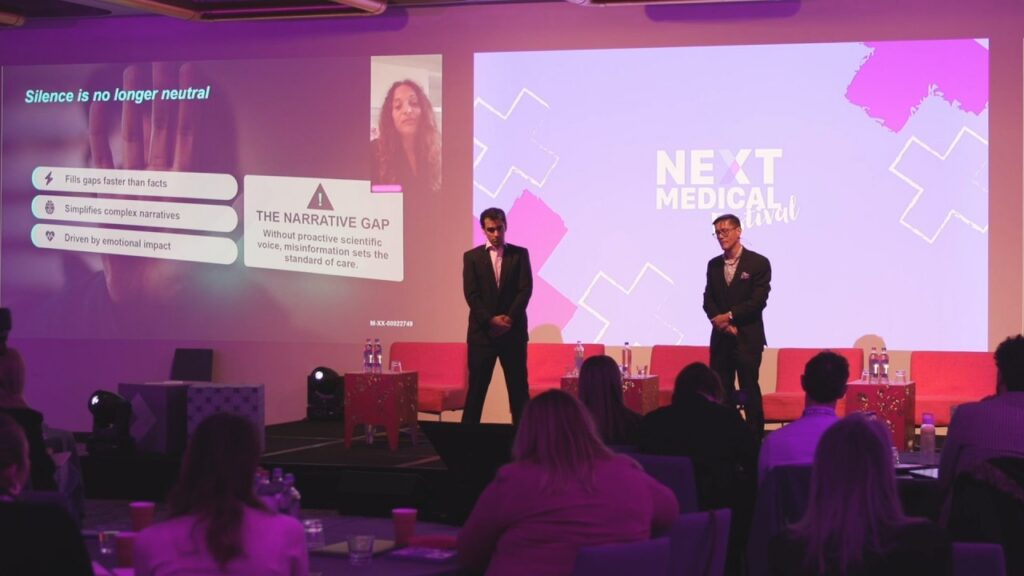
Undoctored Truth Alliance Launch: NEXT Medical Festival
Undoctored Truth Alliance
Vernon Bainton, Kishan Rees, and Natasha Hansjee present the health misinformation problem, and why we need to come together as the Undoctored Truth Alliance to combat it.

2025 Edelman Trust Barometer Global Report:
Trust and the Crisis of Grievance
Edelman Trust
The report reveals a profound shift to acceptance of aggressive action, with political polarization and deepening fears giving rise to a widespread sense of grievance.

The Trust Shift
BBC Radio 4
Across five episodes, Rachel Botsman traces the intriguing history of trust, revealing the patterns across time which might suggest where we’re headed.
Deepfakes and doctors: How people are being fooled by social media scams
The BMJ
Chris Stokel-Walker investigates the increasing prevalence of deepfake videos purporting to be of popular doctors selling scam products.
Battles of Influence: Deliberate Disinformation and Global Health Security
King’s College London
Focuses on deliberate disinformation narratives around COVID-19 and biological weapons, analysing key narratives and placing them in a broader historical context of disinformation campaigns related to public health and global health security.
Oversimplified efforts to counter health misinformation are missing the mark
The BMJ
Public health solutions to health misinformation need to recognise the complex, structural nature of the online information environment, write Tina D Purnat and Jocalyn Clark.

Do Britons trust big pharma?
YouGov
Is the purpose of pharmaceutical companies to protect the health of the public or to reward their owners with profits? Most Britons think it’s the latter. However, this does not necessarily mean that they don’t trust them.
Addressing misinformation about mental health with patients
American Psychological Association
Inaccurate content on social media can prevent people from seeking help and complicate the therapeutic alliance if they do. Psychologists share ways to respond and proactively prevent harm.

Combatting misinformation online
World Health Organization
WHO and partners recognize that misinformation online has the potential to travel further, faster and sometimes deeper than the truth. To counter this, they have taken a number of actions to remain one step ahead.

FCA leads international crackdown on illegal finfluencers
Financial Conduct Authority
Regulators across the globe, led by the FCA, have joined forces to protect social media users from illegal financial promotions by rogue finfluencers.
The Global Risks Report 2025
World Economic Forum
Polarization within societies is hardening views and affecting policy-making. It also continues to fan the flames of misinformation and disinformation, which, for the second year running, is the top-ranked short- to medium-term concern across all risk categories.

Quality health information for all is a fundamental determinant of health
Nature
Society is at a turning point, faced with misleading guidance and ubiquitous, fast-spreading digital and social media. The World Economic Forum and the United Nations both ranked false and misleading information as top-tier global risks. Amplified by generative artificial intelligence (AI), poor quality information corrodes trust in science and drives social and political polarization

Cancer Prevention Action Week 2026
World Cancer Research Fund
Download ready-made resources, social media assets and key messages to help you raise awareness, share trusted information and support the fight against cancer misinformation.
Real-World Misinformation Solutions
Practical, existing examples of organisations actively combatting misinformation.
Vaseline Verified: meet the myth-busting scientists behind the campaign
Unilever
With countless Vaseline hacks on social media, how do consumers know which ones work? Enter Unilever’s R&D experts – skincare scientists who have been putting hundreds of viral tips to the test.
Barbers helping to tackle stigma around HIV
Common Ambition Bristol via BBC News
Barbers and hairdressers are encouraging people to talk about sexual transmitted diseases as increasing numbers of people in Bristol are living with HIV, having been recruited by a community project to help raise awareness about prevention, testing and where to get help.
Coronavirus disease advice for the public: Mythbusters
World Health Organization
The World Health Organisation Mythbusters page clarifies common misconceptions about COVID‑19 and provides evidence‑based facts to counter misinformation.